Kansas Ave Memorial Bridge Mural
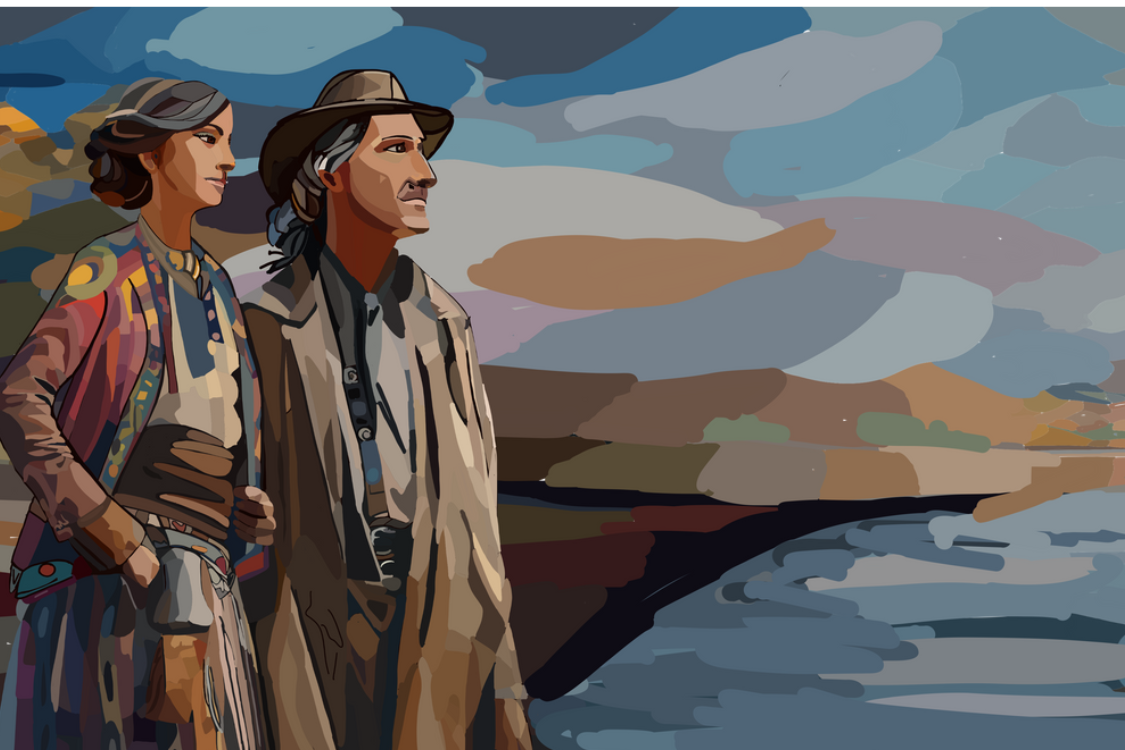
Created in 2026
Mural Team
Lead Artist: Zandra Sneed-Dawkins
Project Manager: Staci Dawn Schnacker
Supporting Artists: Pradeep Bangalore, Jordan E. Brooks, DeAna Morrison, Jonah Graf
This mural stands as a testament to the power of community collaboration. More than 75 volunteers, including city officials, community organizations, residents, Topeka Police Department, Topeka Rescue Mission, Washburn University students, and students from Quincy and Elmont Elementary Schools, contributed to the creation of this project during the summer of 2026.
This mural was supported in part from the National Endowment for the Arts, ArtsConnect, the City of Topeka, Shawnee County Parks and Recreation, and so many community organizations, businesses, donors, and volunteers who believed that public art has the power to transform places and bring people together.
Reflections of North Topeka: A Walking Museum of Possibility
PEOPLE OF THE SOUTH WIND (1600’s-1830’s)
Long before North Topeka, Eugene, or the State of Kansas existed, this land was home to the Kansa, or Kaw Nation, whose name means "People of the South Wind." For centuries, the Kaw lived throughout the Kansas River Valley, where the river provided food, transportation, trade, and a vital connection between communities. The Kansas River and the State of Kansas both bear the name of the Kaw people, reflecting their enduring connection to this land.
The Kaw were a semi-nomadic people whose lives followed the rhythms of the seasons. They established villages along rivers and streams, where women cultivated corn, beans, squash, pumpkins, and sunflowers while gathering native plants and medicines. Men hunted bison, deer, and elk, trapped game, and protected their communities. Trade, diplomacy, and strong family traditions shaped a thriving culture that flourished across the Great Plains long before American settlement.
As westward expansion reached the region in the early 1800s, treaties and federal policies forced the Kaw Nation to cede millions of acres of their ancestral homeland, including the land that would become North Topeka. Although the Kaw Nation is now headquartered in Oklahoma, their history remains woven into the identity of this place.
Before there was a ferry, a railroad, a bridge, or a city, there were the People of the South Wind.
CHEIF WHITE PLUME (1825)
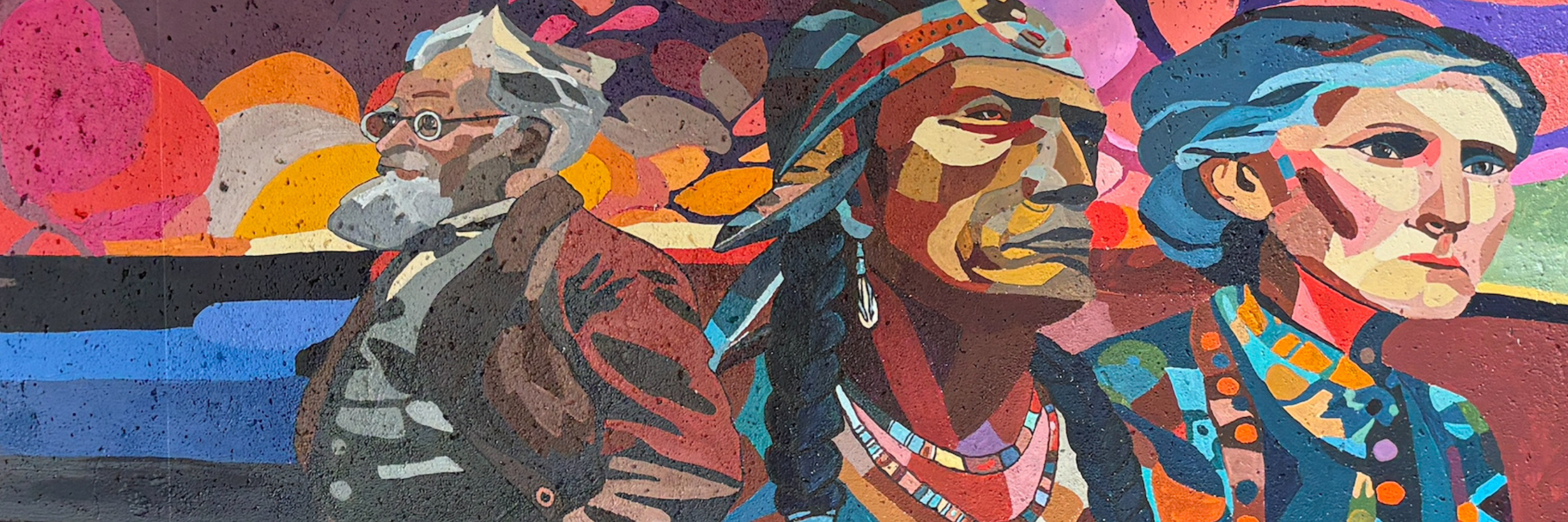
1st sset of Bridge Pillars Facing South.
Chief White Plume (Nom-pa-wa-rah), born around 1765, was a prominent leader of the Kaw (Kanza) Nation during a time of rapid American expansion into the Midwest. Seeking to protect his people through diplomacy, he built relationships with French fur traders and U.S. officials and, in 1821, traveled to Washington, D.C., with a delegation selected by William Clark. There, he met President James Monroe and was recognized by the U.S. government as a principal chief of the Kaw Nation.
In 1825, White Plume signed a treaty ceding approximately 18 million acres of Kaw homeland to the United States in exchange for annuities, livestock, and agricultural
assistance. The agreement also established land tracts along the Kansas River for children of mixed French and Kaw heritage near present-day Topeka. While White Plume believed cooperation was necessary for survival during a period of displacement and change, the treaty accelerated the loss of traditional Kaw lands and culture.
White Plume’s legacy also extends through his descendants. He was the great-great-grandfather of renowned artist Chris Pappan, as well as Charles Curtis, who would later become the first Native American Vice President of the United States.
JULIA GONVILLE (1830)
Julia Gonville was the daughter of Louis Gonville a Frenchman, and Wy-He-See, daughter of White Plume. Most of what is now North Topeka was originally Reservation Number 4, the reserve of Kaw citizen Julia Gonville. Her sisters Josette and Victoire received allotments, as well. Julia married a Frenchman, Louis Pappan, who was quite an entrepreneur. His brothers Joseph and Ahcan married Julia’s sisters, Josephine and Victoria, and set up Pappan’s ferry service, a hotel, and other businesses on their wives’ land. Julia and Louis had a daughter named Helen, who married Orren Curtis. Orren’s father William was a business associate of the Pappan brothers, and utilized some of Julia’s land to found the town of Eugene in 1865, Two years later it was annexed into the City of Topeka. Julia was the grandmother of Helen and Orren’s son Charles Curtis, who served as vice president of the United States under Herbert Hoover. Julia’s reserve was gradually sold bit by bit to other family members and settlers, about which there have been numerous legal questions throughout the years. She died in 1896 and is buried in the Kaw Nation’s cemetery in Oklahoma.
CROSSING THE RIVER | PAPPAN’S FERRY (1842)
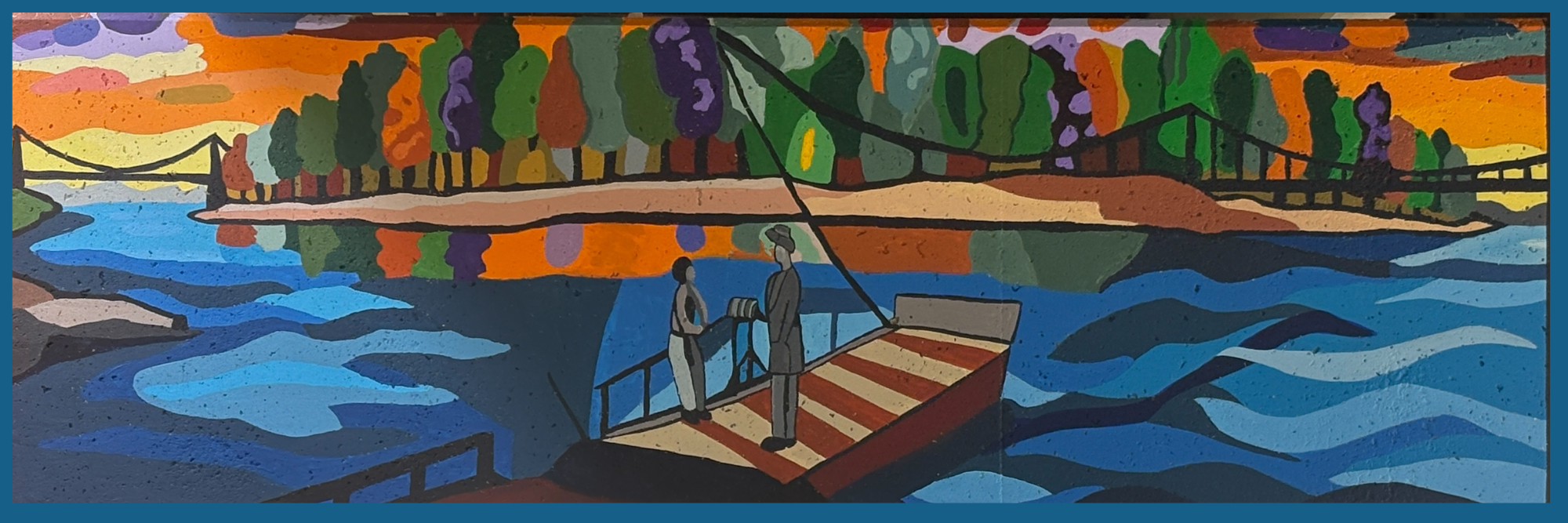
4th Set of Bridge Pillars Facing North
Established in 1842, Pappan’s Ferry began as a simple river crossing using log canoes guided across the Kaw River with long poles. As westward migration increased along the Santa Fe and Oregon-California Trails, the ferry became an important and profitable transportation route for travelers moving through the region. The Pappan family operated the crossing from a nearby cabin along the riverbank, where travelers often camped overnight while waiting for morning crossings. Although severe flooding in 1844 destroyed both the ferry and the family’s cabin, the operation was eventually rebuilt and resumed by 1849. Charging approximately one dollar per wagon.
The ferry became more than a way across the water- it became a point of exchange. People, wagons, livestock, goods, stories, and ambitions all passed through this point. Travelers heading toward New Mexico, Oregon, California, and other western destinations relied on crossings like Pappan’s Ferry. Before there were bridges, before there were railroads, and
before there was a formal city on the north side, this river crossing made North Topeka a place of movement and possibility.
The ferry remained active into the 1870s and played a significant role in the early economic development of the area.
EUGENE KANSAS | THE UNION PACIFIC RAILROAD (1865)
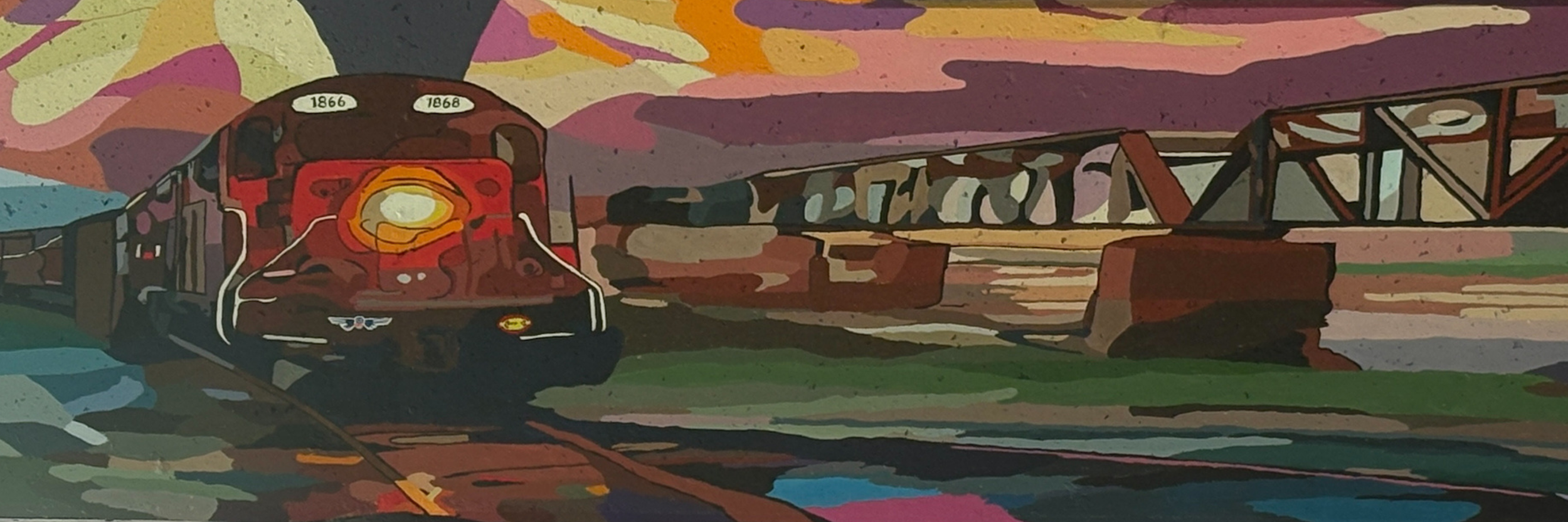
3rd Set of Pillars Facing North
In 1865, landowners William K. Curtis and Louis Laurent established the town of Eugene on land owned by Julia Gonville-Pappan. Situated along the Kansas River near Pappan's Ferry and the newly expanding railroad, Eugene quickly became an important gateway for commerce, transportation, and westward migration. Less than a year later, on New Year’s Day 1865, the Union Pacific Railroad arrived in what is now North Topeka. That moment changed the direction of the community. The arrival of the railroad helped turn Eugene into a center of industry, commerce and growth. Rail lines brought workers, freight, manufacturing, warehouse, mills and new businesses. The north side of the river quickly became one of the industrial engines of the Kansas Capitol.
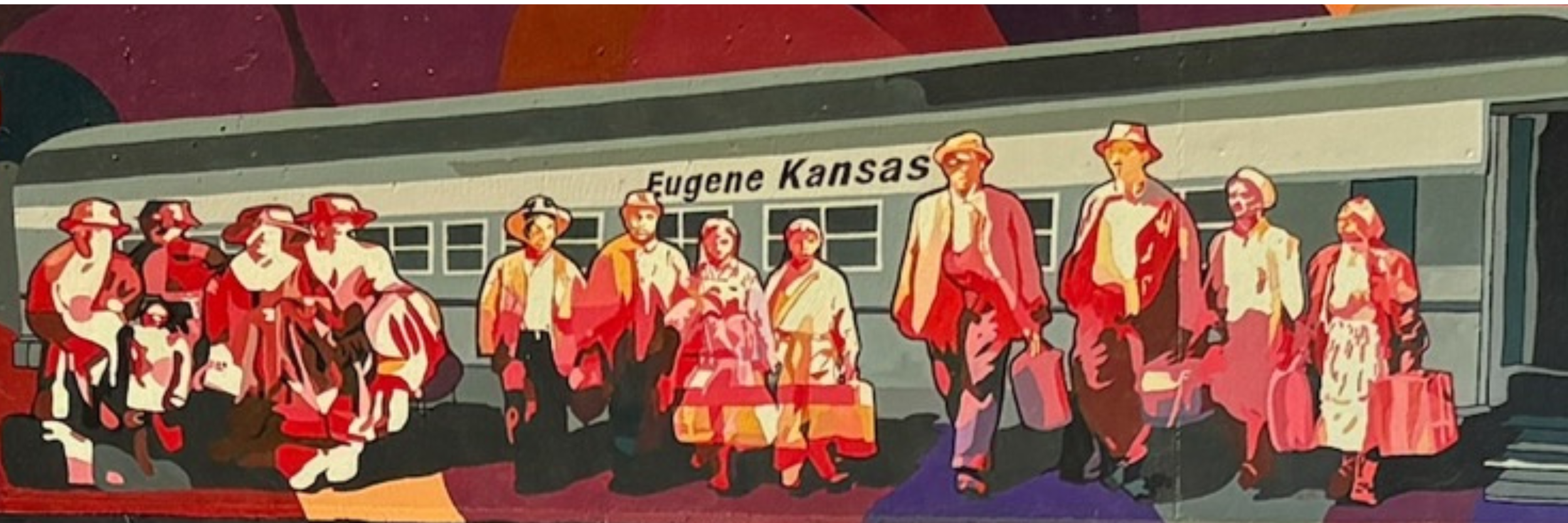
In April 1867, Eugene was annexed by south-side Topeka, becoming the city’s first major expansion. But even after annexation, North Topeka maintained its own identity. It wasn’t simply an extension of Topeka, It was a working district, a railroad district, a business district, and a neighborhood with its own rhythm and pride.
While the name Eugene disappeared from maps, its legacy lives on in the neighborhoods, businesses, and community that helped shape the city's northern gateway.
BUILT BY MANY HANDS (1890-1920’S)
Throughout the late 1800s and into the early 1900s, North Topeka flourished through the hard work of immigrants, laborers, and entrepreneurs. Volga German families, Exodusters seeking new opportunities after Reconstruction, Hispanic families, railroad workers, merchants, and skilled tradespeople helped shape a diverse and resilient community. North Kansas Avenue became a bustling commercial corridor lined with grocery stores, hardware stores, banks, restaurants, theaters, churches, and neighborhood businesses that served both residents and travelers.
The Kansas River brought prosperity, but it also demanded resilience. Periodic flooding had long been a part of life along the river, yet the historic and catastrophic flood of 1903, followed by additional floods in 1904 and 1908, tested North Topeka as never before. Businesses and homes were destroyed, but each time the community rebuilt, strengthening the spirit of determination that would become one of North Topeka's defining characteristics.
By 1916, North Kansas Avenue had once again become one of the region's busiest commercial districts, its blocks filled with locally owned businesses that reflected the determination, resilience, and entrepreneurial spirit of the people who called North Topeka home.
CHARLES CURTIS | 31ST VICE PRESIDENT OF THE UNITED STATES
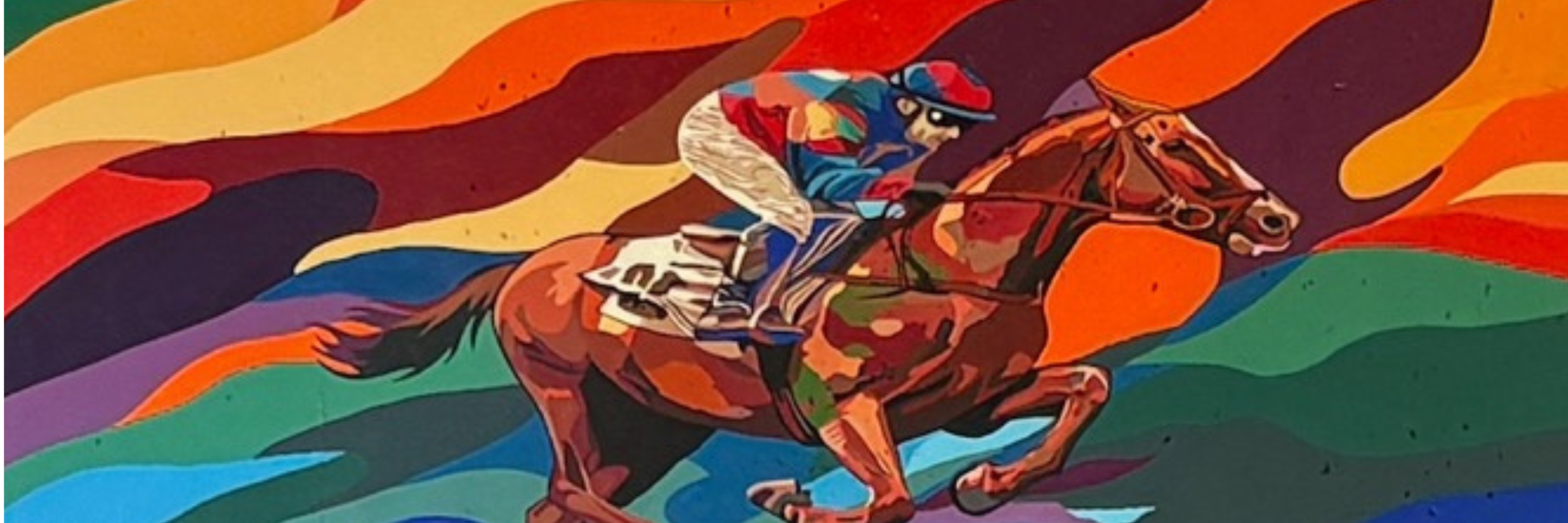
Charles Curtis- a successful jockey.
The Gonville-Pappan family and their descendants continued to shape the history of the North Topeka area long after the ferry ceased operation. Among them was Charles Curtis, grandson of Julia Gonville Pappan, who was born in 1860 and spent much of his childhood among his Kaw relatives on the reservation. As a young man, Curtis became a successful jockey, racing horses throughout Kansas, popularize the growing sport before studying law in Topeka. He went on to build a distinguished political career serving as Shawnee County prosecutor, a member of the Kansas House of Representatives, a United States Senator, and, in 1929, became the first Native American Vice President of the United States under President Herbert Hoover.
While Curtis was celebrated nationally for breaking political barriers and representing Indigenous achievement at the highest level of government, some of his political positions and support of federal policies toward Native communities have since been viewed by historians and tribal members as both beneficial and harmful to Native people.
Curtis also played a pivotal role in the fight for women's voting rights. As Senate sponsor of the 19th Amendment, he helped guide the legislation through Congress, contributing to the constitutional amendment that guaranteed women the right to vote.
FROM FERRY TO FLIGHT
For generations, North Topeka has been a place of movement and connection. Long before highways crossed the Kansas River, travelers relied on Pappan's Ferry, followed by railroads and bridges that linked North Topeka to the rest of Kansas and the nation. As more transportation evolved, so did the community's role as a gateway for commerce, industry, and innovation.
That tradition continued in 1929 with the opening of Philip Billard Municipal Airport, in the neighboring community of Oaklans. Named in honor of former Topeka mayor and newspaper publisher Philip Billard. One of Kansas's earliest municipal airports, Billard became an important center for aviation, serving private pilots, commercial aviation, and military flight training during World War II. The airport reinforced North Topeka's long-standing importance in moving people, goods, and ideas.
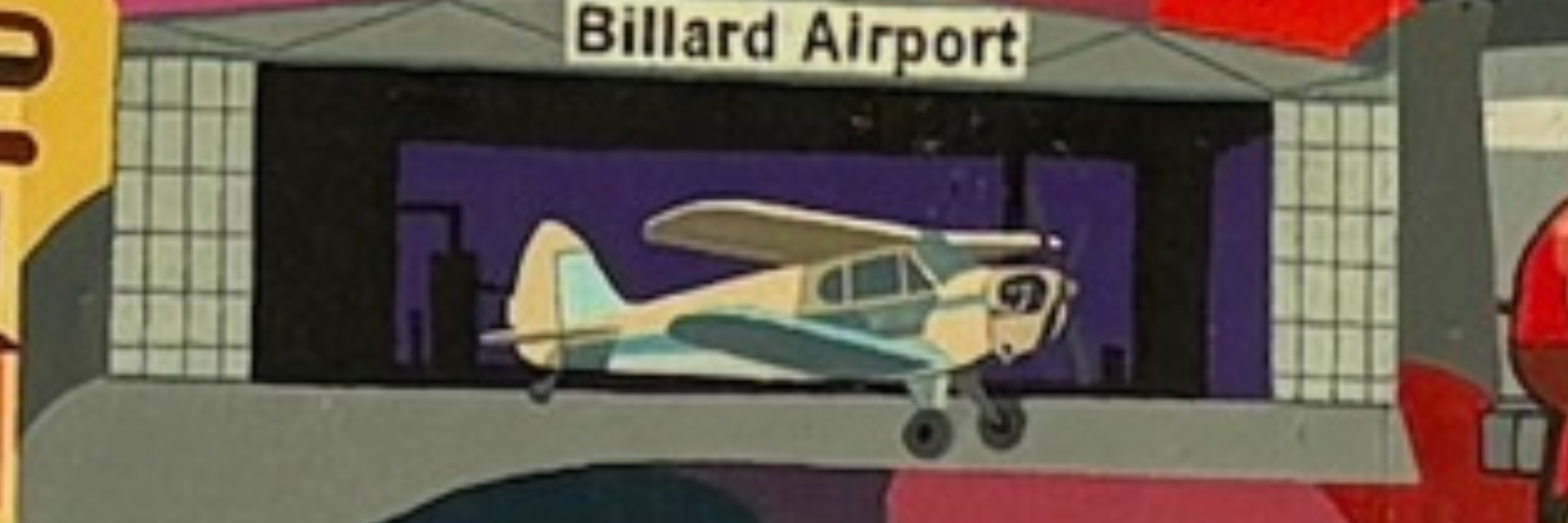
While railroads and river crossings shaped the community's earliest growth, aviation carried North Topeka into a new era. Together, the ferry, railroad, bridges, and airport tell the story of a community built on transportation, where each new connection created opportunities and helped shape the history of Topeka and the state of Kansas.
EDUCATION & EQUALITY
For much of the early twentieth century, North Topeka was home to McKinley Elementary School, located at 925 N. Taylor Street. Built in 1908 for African American students, McKinley was more than a school, it was the heart of a close-knit community. The school was unique among Topeka's segregated schools, featuring its own cafeteria, a student banking program, and transportation services for kindergarten children.
Although McKinley offered many opportunities for its students, it existed because of racial segregation. African American children were required to attend separate elementary schools under Kansas law, regardless of where they lived. In 1951, thirteen Topeka families challenged this unequal system, leading to the landmark Supreme Court case Brown v. Board of Education, which declared that segregated public schools were unconstitutional in 1954.
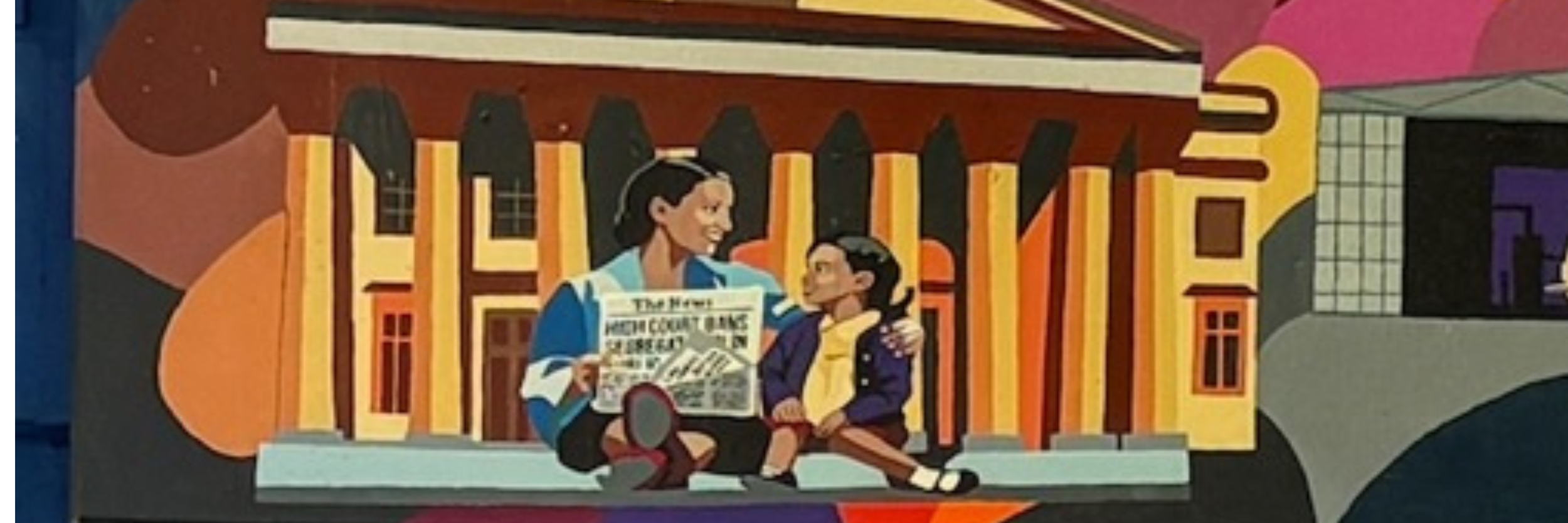
Following the Brown decision, McKinley Elementary closed, marking the end of an era in North Topeka's history. Today, its story stands as a reminder of both the strength of the community it served and the courage of those who fought to ensure that every child would have equal access to education.
THE HEART OF NORTH TOPEKA (1940-1967)
By the 1940s and 1950s, North Topeka was vibrant, bustling, charming, and thriving. The 800 and 900 blocks of North Kansas Avenue served as the North Topeka Business District. There were grocery stores, restaurants, a movie theater, a hardware store, salons, and the kind of everyday places that made a neighborhood feel complete. For people living north of the river, this was where they shopped, gathered, ate, worked, and spent time with friends and family.
The bridge connecting downtown Topeka to North Topeka was essential to life. The Melan Bridge carried people between the two sides of the city and helped keep the business district active. But in 1965, the collapse of the Melan Bridge marked another turning point. When the replacement bridge rerouted traffic away from North Kansas Avenue, the district lost a major flow of visibility and access. Combined with suburban expansion, changing shopping patterns, flood recovery, and disinvestment, North Topeka began to decline.
A NEW BEGINNING (EARLY 200’S)
By the early 2000s, decades of flooding, changing transportation routes, suburban growth, and disinvestment had left many of North Topeka's historic buildings vacant. Yet beneath the aging storefronts, resillence remained something that had defined the community for generations. Residents, business owners, artists, and community leaders believed the district could once again become a place where people gathered, created, and invested in the future.
In 2008, the Heartland Visioning process identified the creation of an arts district as a priority for Topeka's future. Artists, entrepreneurs, volunteers, and community leaders embraced that vision, restoring historic buildings, opening galleries and creative businesses, and laying the foundation for what would become the NOTO Arts & Entertainment District.
What began as a grassroots effort soon grew into a community-wide movement, proving that creativity could preserve history, strengthen neighborhoods, and inspire new opportunities for future generations.
A WALKING MUSEUM OF POSSIBILITY
Today, the NOTO Arts & Entertainment District is home to artists, galleries, nonprofit’s, local businesses, public art, festivals, concerts, and one of Kansas' most recognized arts destinations. Thousands of visitors experience North Topeka each year through First Friday Art Walks, exhibitions, performances, and community events that celebrate creativity and connection.
The Kansas Avenue Memorial Bridge Mural, “Reflections of North Topeka”, continues that tradition. Created through a partnership of artists, historians, volunteers, local leaders, students, and residents, the mural transforms the bridge into a walking museum that honors the people, places, and stories that shaped North Topeka.
From the People of the South Wind to Pappan's Ferry, the Town of Eugene, the railroad, the thriving business district, and the birth of NOTO, every generation has helped write this story. As you walk across this bridge, you become part of its next chapter.
YOUNG ARTISTS, LASTING LEGACY
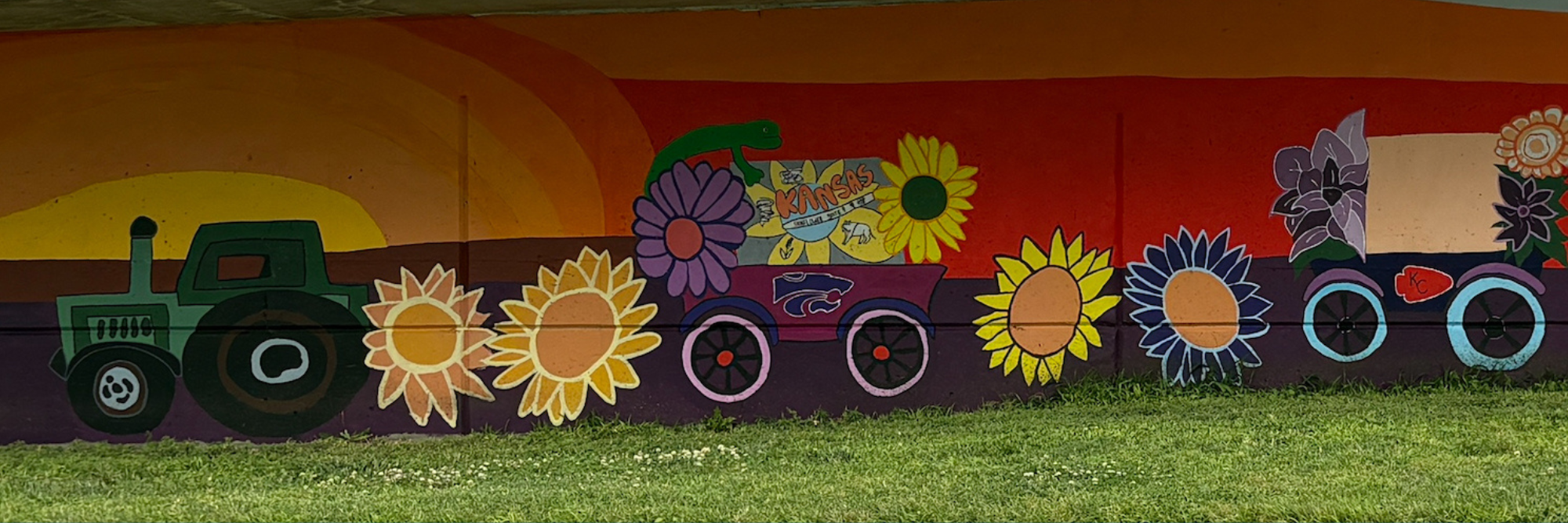
The Kansas Avenue Memorial Bridge Mural is more than a celebration of North Topeka's past, it is an investment in its future. Through a grant from ArtsConnect, students from USD
501 Quincy Elementary School and Seaman USD 345 Elmont Elementary School, alongside their teachers, parents, and volunteers, became part of the creative process by helping design and paint the mural's anchor panels.
Students were invited to imagine what best represents Topeka, Kansas, and their own communities. Their ideas became colorful images celebrating local landmarks, wildlife, agriculture, history, and the people and places that make Kansas home. Those student-created designs were transformed into permanent works of public art on the bridge.
By picking up a paintbrush, these young artists became part of North Topeka's story. Their work stands as a reminder that public art is created not only for the community, but by the community, and that the next generation will continue shaping the history and identity of this place for years to come.